Last updated 5 October 2026.
Fluorine
Element 9 · Halogen · Mined for itself1
Fluorine is the most reactive element, and industry seldom uses it pure. Almost all of it comes from one mineral, fluorite, which is sold as fluorspar. The world mined about 10 million tonnes of fluorspar in 2025, three fifths of it in China. About half becomes hydrofluoric acid, the start of refrigerants, nonstick plastics and battery chemicals. Steel mills and aluminum smelters take most of the rest. Many cities add fluoride to drinking water to prevent tooth decay. Some fluorine chemicals have caused harm: CFCs thinned the ozone layer, and some PFAS chemicals are now limited in US drinking water.
How fluorine compares
Unit value ~ $470 per tonne of fluorspar, acid grade 1 Not on the scale: this is the price of fluorspar, acid grade, not of fluorine. What it costs →
The scales are log scales, except for the shares, which go from 0 to 100%.
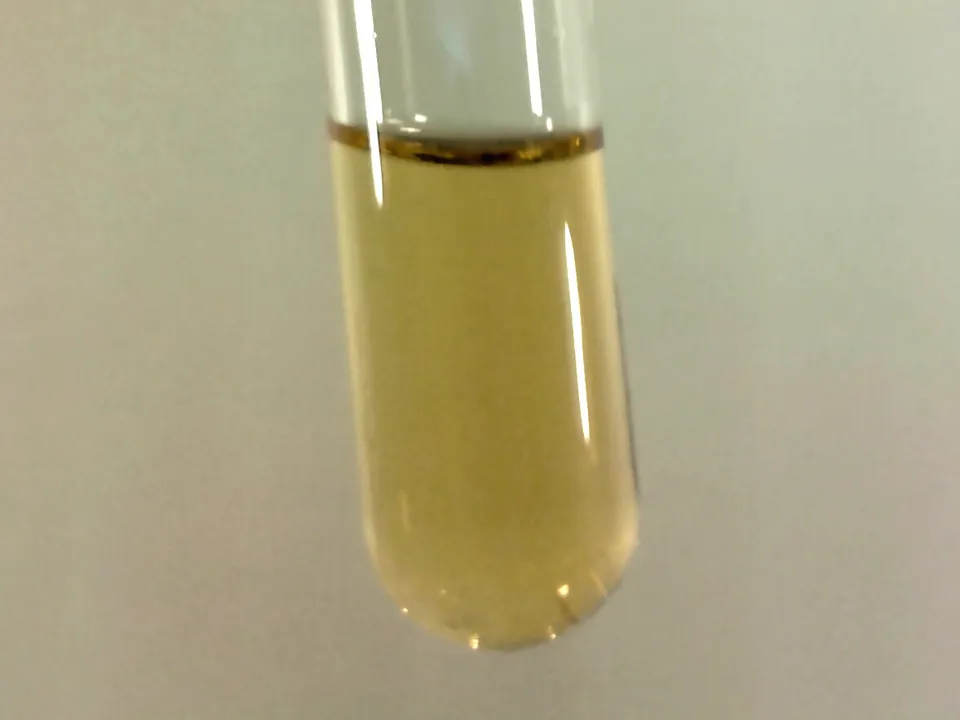

Specimen
- Atomic number
- 9
- Atomic mass
- 18.998
- State at room temperature
- Gas
- Melting point
- -219.6 °C
- Boiling point
- -188.1 °C
- Density
- 0.001696 g/cm³
- Discovered
- 1670
Can I eat it?
- In food and water
- Allowed in food. As fluoride, it is in water, tea and sea fish. The EU lets food makers add fluoride to foods. EFSA says fluoride is not an essential nutrient. It still sets an adequate intake, because fluoride helps prevent tooth decay. High amounts can harm health. 678
- As the pure element
- Reacts violently or burns tissue. Fluorine is a gas at room temperature. It reacts violently with water and makes hydrogen fluoride and ozone. It burns the eyes, skin and airways, and breathing it can fill the lungs with fluid. 9
Learn about fluorine
- 01 How much there is And how much of that can we reach? Fluorine is common in the Earth's crust, about 540 parts per million. World phosphate rock reserves hold about 2.4 billion tonnes of it, far more than fluorspar reserves. The limit on supply is mining and processing, not geology. Read →
- 02 Where it is found What is it found in, and where on Earth? Fluorine is mined from one mineral, fluorite, mostly in deposits left by hot water underground. China, Mexico, South Africa and Mongolia hold most of the known reserves. Phosphate rock holds more fluorine, but it is recovered only as a by-product. Read →
- 03 How we get it How much do we make each year, and how? The world mined about 10 million tonnes of fluorspar in 2025. China mined 60% of it. USGS does not give its fluorine content. Mills concentrate the ore, and chemical plants turn most of it into hydrofluoric acid. Almost none is recycled. Read →
- 04 What we use it for Where does it go, and why this element? About half of all fluorspar becomes hydrofluoric acid, the start of refrigerants, plastics such as Teflon, and battery chemicals. Steel mills and aluminum smelters use most of the rest. Fluorine forms many stable compounds, and aluminum smelting has no substitute for it. Read →
- 05 What it costs What does it cost, and how is it bought and sold? Fluorine is sold mostly as fluorspar. Acid-grade fluorspar cost about $470 a tonne at US ports in 2025. A year's mine output is worth roughly $4 billion. Most fluorspar is sold on year-long contracts, not on an exchange. Read →
- 06 Who controls it Who controls the supply, and who depends on it? China mines about 60% of the world's fluorspar, and China, Mexico and Mongolia together about 90%. The United States imports all it uses. The EU and the United States list fluorspar as critical. China is now also a large importer, mostly from Mongolia. Read →
- 07 Social and political problems What problems does it cause between people, and who carries them? Fluorspar caused a WTO trade case against China's export limits. Miners in Newfoundland had a higher risk of lung cancer from radon. The largest disputes now are about fluorine chemicals: PFAS in drinking water, with settlements in the billions, and fluoride in tap water. Read →
- 08 History How did our relationship with it begin and change? Fluorite was a smelting flux for centuries. Henri Moissan isolated fluorine in 1886, after many chemists were poisoned trying. Steel, then refrigerants, Teflon and the atomic bomb made it an industrial element. Ozone damage and PFAS then led to new limits. Read →
Worth knowing
-
Fluorite is the only mineral that anyone mines for fluorine. Phosphate rock holds far more fluorine, but only some phosphate plants recover it. 10
Where it is found → -
Phosphate rock reserves hold the fluorine of about 5 billion tonnes of fluorspar. That is about 15 times the world's fluorspar reserves. 1
How much there is → -
China mines about 60% of the world's fluorspar, and it still imports more. In the first half of 2025 its imports rose by 48%, mostly from Mongolia. 1
Who controls it → -
The United States was the world's largest fluorspar producer until the mid-1950s. Today it imports all the fluorspar it uses, apart from old stockpiles. 10
Who controls it → -
Several chemists of the 1800s were poisoned while they tried to isolate fluorine. Henri Moissan was poisoned several times before he succeeded in 1886. 11
History → -
In Newfoundland, fluorspar miners breathed radon from groundwater that seeped into the mines. Their higher risk of lung cancer is well established. 12
Social and political problems → -
Some fluorine gases used in refrigerators stay in the air for up to 270 years and trap thousands of times more heat than carbon dioxide. 13
The atom
Electrons
| Shell | Electrons |
|---|---|
| 1 (K) | 2 |
| 2 (L) outermost | 7 |
| Total | 9 |
Configuration [He] 2s² 2p⁵
2s ↑ ↓
2p ↑ ↓ ↑ ↓ ↑
Nucleus
| Protons | 9 |
|---|---|
| Neutrons | 10 |
| Mass number | 19 |
Related elements
New articles by e-mail
Sources
- 1
V. Londono, U.S. Geological Survey, 2026. Fluorspar, in Mineral Commodity Summaries 2026 , Salient statistics; World Mine Production and Reserves; World Resources.
World fluorspar production and reserves by country, US import prices and trade, 2021 to 2025.
-
Global mine production of fluorspar was estimated to have decreased by 1% to 10 million tons in 2025
-
464 336 15 100 470 400
-
6,000 6,000 35 35 53 70 6 1,510 1,500 1,430 1,500 60 50 447 410 138 140 15 15 75 55 146 160 316 200 10,300 10,000
-
74 billion tons, containing about 5 billion tons of 100% fluorspar equivalent
-
China's imports of fluorspar in the first half of 2025 increased by 48% to 856,000 tons
-
- 2
Theodore Gray, periodictable.com (data from Wolfram ElementData), 2026. Technical data for Fluorine (from Wolfram ElementData) , Abundances.
Abundance in the universe, crust, oceans and human body, as mass fractions.
-
% in Earth's Crust 0.054%
-
- 3
G. Mudd and others, British Geological Survey, 2024. UK 2024 Criticality Assessment (Open Report OR/24/047) , Results tables; section 3.1.7; recycling rate table.
Fluorine rated non-critical; UK fluorspar mining ended in 2023; end-of-life recycling rate of 1%.
-
Nickel (Ni) 60 Fluorine 1
-
- 4
IUPAC Commission on Isotopic Abundances and Atomic Weights (CIAAW), 2024. Abridged Standard Atomic Weights 2024 .
The atomic mass shown for the 84 elements that have a standard atomic weight.
- 5
National Center for Biotechnology Information (PubChem), 2026. Periodic Table of Elements .
Electron configuration, melting and boiling points, density and discovery year for all 118 elements.
- 6
European Food Safety Authority (EFSA), 2017. Dietary Reference Values for nutrients. Summary report (amended 2019) .
Summaries of the EFSA NDA Panel opinions on each vitamin and mineral, section 4 (minerals) and section 5 (cobalamin).
-
Major dietary fluoride sources are water and water-based beverages or foods reconstituted with fluoridated water, tea, marine fish ... As fluoride is not an essential nutrient ... Because of the beneficial effect of dietary fluoride on the prevention of caries, the Panel considered that the setting of an Adequate Intake (AI) is appropriate
-
- 7
European Parliament and Council of the European Union, 2006. Regulation (EC) No 1925/2006 on the addition of vitamins and minerals and of certain other substances to foods , Annex I, point 2 (minerals).
The text as adopted by the EU, from legislation.gov.uk. EUR-Lex served the quote checker an empty page.
-
VITAMINS AND MINERALS WHICH MAY BE ADDED TO FOODS ... Molybdenum Fluoride Chloride Phosphorus
-
- 8
Agency for Toxic Substances and Disease Registry (ATSDR), 2014. ToxFAQs for Fluorides, Hydrogen Fluoride, and Fluorine .
-
Small amounts of fluoride help prevent tooth cavities, but high levels can harm your health
-
- 9
International Labour Organization and World Health Organization (International Chemical Safety Cards), 2001. ICSC 0046 - Fluorine , Chemical dangers; Effects of short-term exposure.
-
Reacts violently with water. This produces toxic and corrosive vapours of ozone (see ICSC 0068) and hydrogen fluoride (see ICSC 0283).
-
The substance is very corrosive to the eyes, skin and respiratory tract. Inhalation of this gas may cause lung oedema.
-
- 10
T.S. Hayes, M.M. Miller, G.J. Orris and N.M. Piatak, U.S. Geological Survey, 2017. Fluorine, chap. G of Critical mineral resources of the United States (Professional Paper 1802) , pp. G1-G80.
Minerals, deposit types, history of US production, processing, environment and health.
-
Fluorite is currently the only mineral that is mined for fluorine
-
The United States was the world's leading producer of fluorspar until the mid-1950s
-
- 11
Los Alamos National Laboratory, 2026. Fluorine, Periodic Table of Elements , History; Properties; Uses.
Name, isolation by Moissan, reactivity, and the start of large-scale production in the Second World War.
-
Most chemists studying fluorine in the 1800s were poisoned by their research
-
- 12
P.J. Villeneuve, R. Morrison and R. Lane, Radiation and Environmental Biophysics, 2025. Exposure to radon progeny and cancer mortality, excluding lung cancer, in the cohort of Newfoundland Fluorspar Miners between 1950 and 2016 , Introduction.
States that the higher lung cancer risk of the miners is well established; the paper itself studies other cancers.
-
The increased risk of lung cancer from radon progeny among Newfoundland fluorspar miners is well established
-
- 13
U.S. Geological Survey, 2025. Fluorspar, in 2022 Minerals Yearbook (advance release) , pp. 26.1-26.4.
Grades, world end uses in 2022, prices, laws on fluorinated gases and PFAS, world review and outlook.
-
in the thousands as compared with carbon dioxide with a GWP of 1) and have long atmospheric lifecycles (up to 270 years)
-
- 14
National Institute of Standards and Technology (NIST), 2026. Atomic Weights and Isotopic Compositions for All Elements .
Isotopic composition of each element; the most abundant isotope sets the neutron count in the nucleus view.