Last updated 5 October 2026.
Nitrogen
Element 7 · Nonmetal · Extracted from air, water or natural gas1
Nitrogen makes up 78% of the air, but plants cannot use it in that form. Industry fixes it by the Haber-Bosch process, which joins nitrogen from the air with hydrogen, mostly from natural gas, to make ammonia. Factories made about 160 million tonnes of nitrogen in ammonia in 2025. About 70% of ammonia goes into fertilizer. Erisman and colleagues estimate that this fertilizer feeds about half of the world's people. China makes about 30% of the world's ammonia. Before 1913 the world depended on bird guano from Peru and on nitrate from Chile. Nitrate was one cause of the War of the Pacific.
How nitrogen compares
Price $423 per tonne of urea 3 Not on the scale: this is the price of urea, not of nitrogen. What it costs →
The scales are log scales, except for the shares, which go from 0 to 100%.
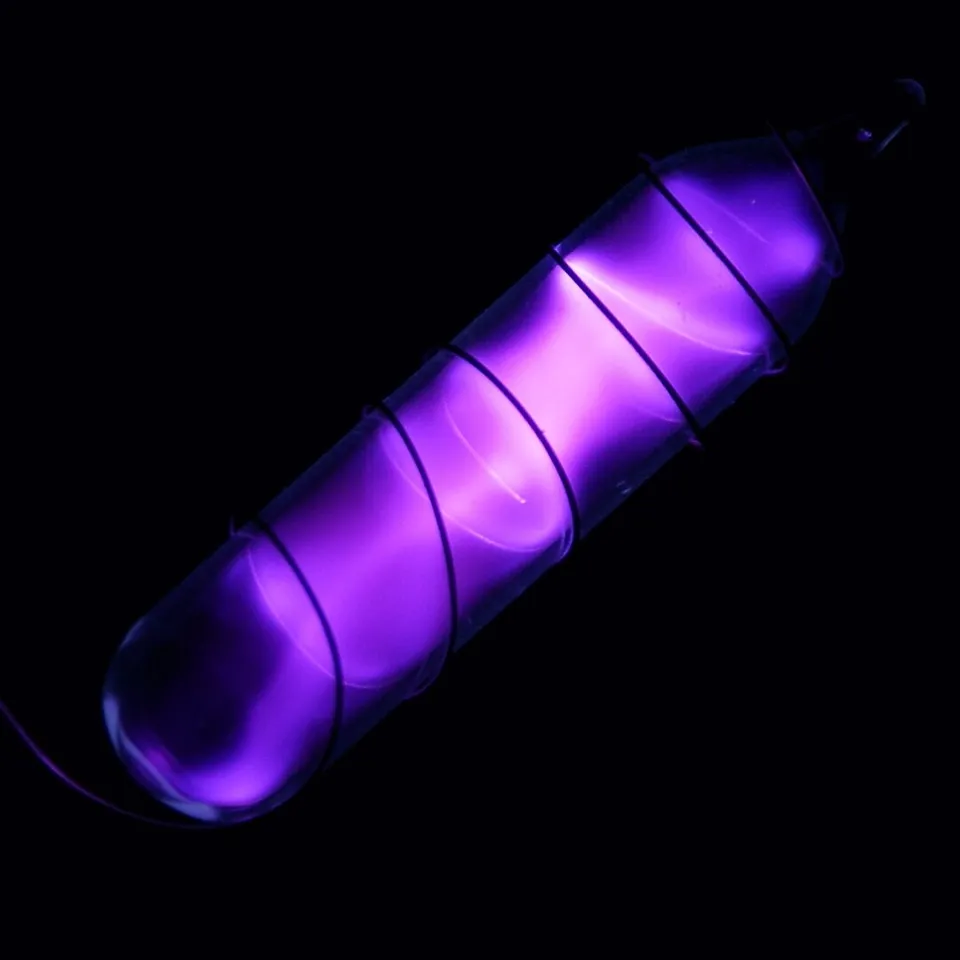

Specimen
- Atomic number
- 7
- Atomic mass
- 14.007
- State at room temperature
- Gas
- Melting point
- -210 °C
- Boiling point
- -195.8 °C
- Density
- 0.001251 g/cm³
- Discovered
- 1772
Can I eat it?
- In food and water
- Your body needs it. Nitrogen is one of the four most common elements in the human body. The EU also allows nitrogen gas as food additive E 941. 78
- As the pure element
- Allowed in food. Nitrogen is a gas at room temperature. The EU allows it in all foods as additive E 941, with no fixed maximum amount (quantum satis). A high level in a closed space can cause suffocation. The US FDA warns that swallowed liquid nitrogen can severely damage internal organs. 8910
Learn about nitrogen
- 01 How much there is And how much of that can we reach? Nitrogen gas makes up 78% of the air, about 3.9 million billion tonnes. Plants and animals cannot use it in that form. Industry fixes it into ammonia with energy from natural gas or coal. The air will not run out; the energy and the hydrogen are the limit. Read →
- 02 Where it is found What is it found in, and where on Earth? Almost all nitrogen is in the air, not in rock. The only large mineral deposits are the nitrate fields of the Atacama Desert in Chile. They built up over millions of years because the desert is so dry that rain and soil life do not remove the nitrate. Read →
- 03 How we get it How much do we make each year, and how? Factories made about 160 million tonnes of nitrogen as ammonia in 2025. China made about 30% of the world's ammonia. Most plants make hydrogen from natural gas or coal and join it with nitrogen from the air. Fixed nitrogen is not recycled in the usual sense. Read →
- 04 What we use it for Where does it go, and why this element? About 70% of ammonia goes into fertilizer. Erisman and colleagues estimate that this fertilizer feeds about half of the world's people. The rest goes into explosives, plastics, fibers and other chemicals. Plants need nitrogen, and nothing replaces it. Read →
- 05 What it costs What does it cost, and how is it bought and sold? Nitrogen is sold mostly as urea and ammonia, not as an element. In 2025 the world urea price averaged about $423 per tonne. Prices jumped in 1974, 2008, 2022 and 2026. Natural gas is the main cost of making ammonia. Read →
- 06 Who controls it Who controls the supply, and who depends on it? China makes about 30% of the world's ammonia, but at least 22 countries make more than a million tonnes of nitrogen each. Trade is more concentrated: the Middle East supplies almost 40% of traded urea. Morocco imports all its ammonia, according to the IEA. Read →
- 07 Social and political problems What problems does it cause between people, and who carries them? Nitrogen fertilizer feeds about half of the world's people, by published estimates. Nitrate gave Chile much of its state revenue after the War of the Pacific. Ammonium nitrate explosions have killed hundreds of people at a time, as at Oppau, Texas City and Beirut. Read →
- 08 History How did our relationship with it begin and change? Daniel Rutherford described nitrogen gas in 1772. For a century, farmers got extra nitrogen from Peruvian guano and Chilean nitrate. In 1909 Fritz Haber made ammonia from air, and BASF built the first plant in 1913. Production then grew about 60 times from 1946 to 2022. Read →
Worth knowing
-
Estimates by Erisman and colleagues say that nitrogen fertilizer fed 48% of the world's people in 2008. 11
What we use it for → -
In 2010 the Haber-Bosch process fixed about 120 million tonnes of nitrogen, twice what natural processes fixed on land. 12
How much there is → -
Making ammonia used about 2% of the world's final energy in 2020. 13
How we get it → -
After the War of the Pacific, export taxes on nitrate often gave the Chilean state more than half of its revenue. 14
Social and political problems → -
From the 1840s, Peru exported some 12 million tons of bird guano, a nitrogen fertilizer, in about three decades. 15
History → -
The Chilean nitrate deposits exist because the Atacama Desert is extremely dry and has few plants and soil microbes that use nitrate, according to a USGS study. 16
Where it is found → -
Urea prices doubled between January and April 2026, after the Strait of Hormuz closed during a conflict in the Middle East, according to the IEA. 17
What it costs →
The atom
Electrons
| Shell | Electrons |
|---|---|
| 1 (K) | 2 |
| 2 (L) outermost | 5 |
| Total | 7 |
Configuration [He] 2s² 2p³
2s ↑ ↓
2p ↑ ↑ ↑
Nucleus
| Protons | 7 |
|---|---|
| Neutrons | 7 |
| Mass number | 14 |
Related elements
New articles by e-mail
Sources
- 1
Royal Society of Chemistry, 2026. Nitrogen: element information, properties and uses .
Discovery, name, uses, biological role, bond energy and the separation of nitrogen from air.
-
It is obtained by the distillation of liquid air
-
- 2
U.S. Geological Survey (A.S. Brioche), 2026. Nitrogen (Fixed)—Ammonia, in Mineral Commodity Summaries 2026 , pp. 1-2: Domestic Production and Use; Salient Statistics; Events, Trends, and Issues; World Ammonia Production and Reserves table; World Resources; Substitutes.
World and US ammonia production in nitrogen content, prices, trade, resources and substitutes, 2021 to 2025.
-
World total (rounded) Plant production 2024 2025e ... 156,000 160,000
-
World total (rounded) Plant production 2024 2025e ... 156,000 160,000 ... The average ammonia price for 2025 was estimated to be $450 per short ton
-
China Egypt Germany India ... World total (rounded) Plant production 2024 2025e ... 49,000 49,000 ... 156,000 160,000
-
Recycling: None.
-
- 3
World Bank, 2026. Commodity Price Data (The Pink Sheet), annual prices , Annual Prices (Nominal) and Annual Prices (Real), column 'Urea'; Description sheet; file updated 2 September 2026.
Urea price, annual averages 1960 to 2025, nominal and in real 2010 US dollars. The site uses the nominal series and converts it to 2025 dollars with the US CPI-U.
-
Urea ... 422.7
-
- 4
Randy L. Korotev, Washington University in St. Louis, 2026. Terrestrial abundances of the elements .
Bulk continental crust by mass from four compilations; nitrogen 20 ppm (Mason 1966) and 60 ppm (Wedepohl 1995).
-
bulk continental crust ... Wedepohl
-
- 5
IUPAC Commission on Isotopic Abundances and Atomic Weights (CIAAW), 2024. Abridged Standard Atomic Weights 2024 .
The atomic mass shown for the 84 elements that have a standard atomic weight.
- 6
National Center for Biotechnology Information (PubChem), 2026. Periodic Table of Elements .
Electron configuration, melting and boiling points, density and discovery year for all 118 elements.
- 7
OpenStax, Rice University, 2022. Anatomy and Physiology 2e, section 2.1: Elements and Atoms: The Building Blocks of Matter .
-
beginning with the most abundant: oxygen (O), carbon (C), hydrogen (H), and nitrogen (N)
-
- 8
European Commission, 2011. Commission Regulation (EU) No 1129/2011 establishing a Union list of food additives , Annex, Parts B and E.
The text as adopted by the EU in 2011, from legislation.gov.uk. Later EU amendments are not in it.
-
E 941 Nitrogen
-
Food additives permitted in all categories of foods E 290 Carbon dioxide quantum satis ... E 941 Nitrogen quantum satis
-
- 9
US Food and Drug Administration, 2018. Liquid nitrogen and dry ice in food (Food Code Reference System) .
-
Both liquid nitrogen and dry ice can cause severe damage to skin and internal organs if mishandled or accidently ingested due to the extremely low temperatures they can maintain.
-
- 10
International Labour Organization and World Health Organization (International Chemical Safety Cards), 1999. ICSC 1199 - Nitrogen (liquefied) , Notes.
-
High concentrations in the air cause a deficiency of oxygen with the risk of unconsciousness or death.
-
- 11
Hannah Ritchie, Our World in Data, 2017. How many people does synthetic fertilizer feed? .
Summary of the estimates by Smil (2004) and Erisman et al. (2008) of the share of people fed by nitrogen fertilizer.
-
44 percent of the global population in 2000 being fed by nitrogen fertilizers, rising to 48 percent in 2008
-
- 12
D. Fowler and others, Philosophical Transactions of the Royal Society B 368, 2013. The global nitrogen cycle in the twenty-first century , Abstract and Introduction.
Natural and human nitrogen fixation, world totals for about 2010.
-
the fixation of nitrogen through Haber–Bosch (120 Tg N yr−1) in 2010 was double the natural terrestrial sources
-
- 13
International Energy Agency, 2021. Ammonia Technology Roadmap: Towards more sustainable nitrogen fertiliser production , Executive summary pp. 8-12; Chapter 1 pp. 14-16, 22-30, 34.
Uses, energy, CO2, production by country, trade, process and scenarios for ammonia, mostly for 2020.
-
In 2020 global ammonia production accounted for around 2% (8.6 EJ) of total final energy consumption
-
- 14
Library of Congress, Federal Research Division (Rex A. Hudson, ed.), 1994. Chile: A Country Study. The War of the Pacific, 1879-83 .
Causes and results of the War of the Pacific and the nitrate economy of Chile. The page is a copy of the Library of Congress text.
-
Export taxes on nitrates often furnished over 50 percent of all state revenues
-
- 15
Library of Congress, Federal Research Division (Rex A. Hudson, ed.), 1992. Peru: A Country Study. The Guano Era .
Peruvian guano exports and state revenue, 1840s to 1870s.
-
By the time that this natural resource had been depleted three decades later, Peru had exported some 12 million tons of the fertilizer
-
- 16
George E. Ericksen, U.S. Geological Survey, 1981. Geology and Origin of the Chilean Nitrate Deposits (Professional Paper 1188) , Abstract p. 1; Geomorphology.
How the Atacama nitrate deposits formed, and their ore grade.
-
extremely arid climate ... paucity of nitrate-utilizing plants and soil microorganisms
-
- 17
International Energy Agency, 2026. Global Hydrogen Review 2026 , Chapter 1, pp. 20-23: fertilisers and the conflict in the Middle East; Figure 1.1.
Ammonia and urea trade in 2024, the 2026 closure of the Strait of Hormuz, prices and government measures.
-
Urea prices, for example, doubled between January and April 2026
-
- 18
National Institute of Standards and Technology (NIST), 2026. Atomic Weights and Isotopic Compositions for All Elements .
Isotopic composition of each element; the most abundant isotope sets the neutron count in the nucleus view.