Hydrogen
Element 1 · Nonmetal · Made from compounds in industry
Hydrogen is the most common element in the universe, but on Earth almost all of it is locked in water and in organic compounds. Industry made and used about 103 million tonnes of hydrogen in 2025. Most of it was made from natural gas and coal, and most of it went into oil refining, ammonia for fertilizer, and methanol. Making it released about 1 billion tonnes of carbon dioxide. Less than 1% came from low-emission routes such as electrolysis with clean power. Natural hydrogen in the ground exists, but only one well, in Mali, produces it.
Last updated 3 October 2026.
Where hydrogen sits
How hydrogen compares to other elements. Each link on the right goes to the chapter about that number.
The scales are log scales, except for the shares, which go from 0 to 100%.
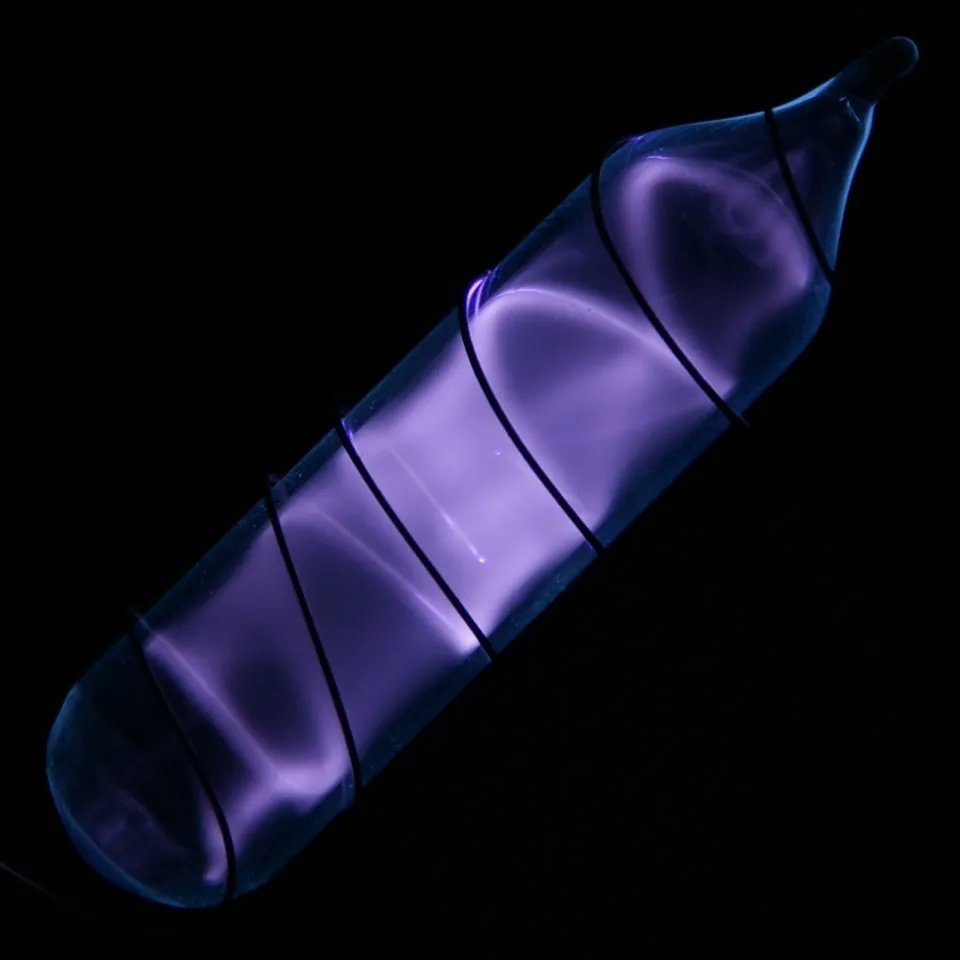

Specimen
- Atomic number
- 1
- Atomic mass
- 1.008
- State at room temperature
- Gas
- Melting point
- -259.3 °C
- Boiling point
- -252.9 °C
- Density
- 0.00008988 g/cm³
- Discovered
- 1766
Can I eat it?
- In food and water
- Your body needs it. Hydrogen is in water and in food molecules such as glucose. It is one of the four most common elements in the human body. 5
Nine chapters
- 01 How much there is How much of it exists, and how much of that can we reach? Hydrogen is the most common element in the universe and is part of every water molecule on Earth. Free hydrogen gas is rare. Industry makes what it needs from natural gas, coal or water, so there are no reserves in the usual sense. Read →
- 02 Where it is found What is it found in, and where on Earth? Almost all hydrogen used today is made from natural gas, coal and oil, which are its working "ores". Natural hydrogen gas forms where water reacts with iron-rich rock, but only one well, in Mali, produces it. Read →
- 03 How we get it How much do we make each year, and how? The world made and used about 103 million tonnes of hydrogen in 2025, mostly from natural gas and coal at the plants that use it. China makes almost 30%. About 1% came from low-emission routes. Read →
- 04 What we use it for Where does it go, and why this element? Almost all hydrogen goes into oil refining, ammonia for fertilizer, methanol and steel. In each case hydrogen is a chemical building block. New uses, mostly for making biofuels, are just over 1% of demand. Read →
- 05 What it costs What does it cost, and how is it bought and sold? Hydrogen has no exchange price. Most of it is made and used at the same plant. Its "price" is a production cost. In 2025 that was about USD 1 to 4 per kilogram from fossil fuels, and USD 3 to over 10 from renewable power. Read →
- 06 Who controls it Who controls the supply, and who depends on it? Hydrogen is made in almost every industrial country, so control of hydrogen itself is spread out. Control is more concentrated in the natural gas used to make it, and in the trade in ammonia, urea and methanol. The Middle East is a large supplier of all of these. Read →
- 07 Social and political problems What problems does it cause between people, and who carries them? Through hydrogen, food prices depend on gas supply, so wars that cut gas and fertilizer trade hurt farmers in importing countries. Hydrogen fires and explosions injure workers. New export projects, targets and subsidies cause public disputes. Read →
- 08 Harm to health and the planet What harm does getting and using it do to bodies and the environment? Making hydrogen released about 1 billion tonnes of carbon dioxide in 2025, because almost all of it comes from gas and coal. The gas itself is not toxic, but it burns easily, and leaked hydrogen adds to global warming indirectly. Read →
- 09 History How did our relationship with it begin and change? Henry Cavendish isolated hydrogen in 1766, and Antoine Lavoisier named it "water-former". It lifted balloons and airships, then became a bulk chemical for ammonia, bombs, rockets and refineries. World use passed 100 million tonnes in 2025. Read →
Worth knowing
-
Making hydrogen released about 1 billion tonnes of carbon dioxide in 2025, more than Indonesia and France together. 1
Harm to health and the planet → -
The Apollo spacecraft made their electricity in fuel cells that combined hydrogen and oxygen. The astronauts drank the water the cells produced. 8
History → -
The only well in the world that produces natural hydrogen was found by accident in Mali in 1987, while drilling for water. It yields about 5 tonnes a year. 1
Where it is found → -
If 1% of the IEA's best estimate of natural hydrogen underground could be recovered, it would cover about 560 years of today's use. 1
How much there is → -
Leaked hydrogen warms the climate. Over 100 years, a tonne of it has about 11.6 times the effect of a tonne of carbon dioxide. 9
Harm to health and the planet → -
A Canadian fertilizer plant was rebuilt in the Second World War to make heavy water, which contains the hydrogen isotope deuterium, for the Manhattan Project. 10
History → -
A kilogram of hydrogen holds almost three times the energy of a kilogram of petrol, but a liter of liquid hydrogen holds a quarter of the energy of a liter of petrol. 11
What we use it for →
The atom
| Shell | Electrons |
|---|---|
| 1 (K) outermost | 1 |
| Total | 1 |
Configuration 1s¹
1s ↑
Related elements
New elements by e-mail
Sources
- 1
International Energy Agency, 2026. Global Hydrogen Review 2026 , Executive summary pp. 9-14; Middle East effects p. 21; Box 1.1 p. 20; targets p. 31; geological hydrogen pp. 36-42; demand pp. 44-57; transport p. 62; production pp. 83-85, 106; costs pp. 110-116; RED transposition p. 133; trade p. 143; policy p. 194; definitions pp. 257-258.
Hydrogen demand, production routes, costs, emissions, trade and natural hydrogen for 2025.
-
Global hydrogen demand surpassed 100 Mt for the first time in 2025 ... 103 Mt H2
-
when averaged over the last 15 years, the LCOH from unabated natural gas is USD 2.3/kg H2
-
103 Mt H2 ... when averaged over the last 15 years, the LCOH from unabated natural gas is USD 2.3/kg H2 ... ranged between less than USD 1/kg H2 and more than USD 4/kg H2 in 2025
-
hydrogen production generated around 1 000 Mt of CO2 in 2025 ... exceeding the combined emissions of Indonesia and France
-
The accidental discovery of a natural hydrogen well in Bourakébougou, Mali, during water drilling in 1987 ... the well has produced around 5 tpa H2
-
if 1% of the bestestimate resource were recoverable, it would be equivalent to around 560 years of today's hydrogen consumption
-
- 2
Laura Schaefer, Katharina Lodders and Bruce Fegley Jr., Astrophysical Journal, 2012. Vaporization of the Earth: application to exoplanet atmospheres , Section 3.2.1; Table 1 (continental crust, from Wedepohl 1995).
Hydrogen in the continental crust by weight, and a comparison with other estimates.
-
We use 0.045 wt. % H as the hydrogen abundance in Earth's continental crust (Table 1) from Wedepohl (1995)
-
- 3
UK Critical Minerals Intelligence Centre, British Geological Survey, 2024. UK 2024 Criticality Assessment , Table 1 p. 9; scope p. 11; Hydrogen (natural) rows pp. 125, 152.
The 34 UK critical minerals; natural hydrogen assessed as a candidate.
-
Natural hydrogen ... Ammonia production 55 0 ... Petroleum refining 25 0
-
- 4
National Center for Biotechnology Information (PubChem), 2026. Periodic Table of Elements .
Atomic mass, electron configuration, melting and boiling points, density and discovery year for all 118 elements.
- 5
OpenStax, Rice University, 2022. Anatomy and Physiology 2e, section 2.1: Elements and Atoms: The Building Blocks of Matter .
-
beginning with the most abundant: oxygen (O), carbon (C), hydrogen (H), and nitrogen (N)
-
the compound glucose is an important body fuel. It is always composed of the same three elements: carbon, hydrogen, and oxygen
-
- 6
European Commission, 2011. Commission Regulation (EU) No 1129/2011 establishing a Union list of food additives , Annex, Parts B and E.
The text as adopted by the EU in 2011, from legislation.gov.uk. Later EU amendments are not in it.
-
Food additives permitted in all categories of foods E 290 Carbon dioxide quantum satis ... E 949 Hydrogen quantum satis
-
- 7
International Labour Organization and World Health Organization (International Chemical Safety Cards), 2014. ICSC 0001 - Hydrogen , Notes; Classification and labelling.
-
High concentrations in the air cause a deficiency of oxygen with the risk of unconsciousness or death.
-
Extremely flammable gas
-
- 8
Smithsonian National Air and Space Museum, 2026. Fuel Cell, Apollo .
How the Apollo fuel cells used hydrogen and oxygen.
-
Each fuel cell combines hydrogen and oxygen to produce electricity and water. The water was used for drinking by the astronaut crew.
-
- 9
Maria Sand and others, Communications Earth & Environment, 2023. A multi-model assessment of the Global Warming Potential of hydrogen , Abstract; Introduction; Results (hydrogen budget), Fig. 1.
Hydrogen in the air, its sinks and lifetime, and its indirect warming effect.
-
We estimate a hydrogen GWP100 of 11.6 ± 2.8 (one standard deviation)
-
- 10
Stephen A. Andrews, Madison T. Andrews and Thomas E. Mason (Los Alamos National Laboratory), 2021. Canadian Contributions to the Manhattan Project and Early Nuclear Research , Section III.B, Heavy water.
Heavy water from the Trail ammonia plant for the Manhattan Project. A preprint (LA-UR-21-20844).
-
was modified to produce heavy water, in addition to its normal output of fertilizer
-
- 11
U.S. Department of Energy, Hydrogen and Fuel Cell Technologies Office, 2026. Hydrogen Storage .
Energy content of hydrogen per kilogram and per liter.
-
liquid hydrogen has a density of 8 MJ/L whereas gasoline has a density of 32 MJ/L
-