Hydrogenium, the metal that was a gas
In 1869 Thomas Graham, Master of the Royal Mint, had coin-sized pieces of hydrogen-filled palladium struck and stamped “Hydrogenium”. He thought the hydrogen in them was a metal.
The Science Museum Group in London has a small disc of palladium, 19 millimeters across, the size of a half-sovereign coin. On one side is the head of the young Queen Victoria. On the other side are the words “Palladium. Hydrogenium. 1869. Graham.” An old label gives what is in it: “900 volumes of Hydrogen” (Science Museum Group, 1943-53).
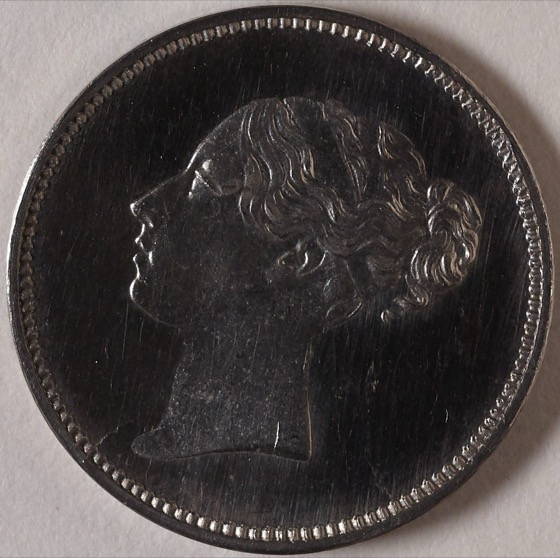
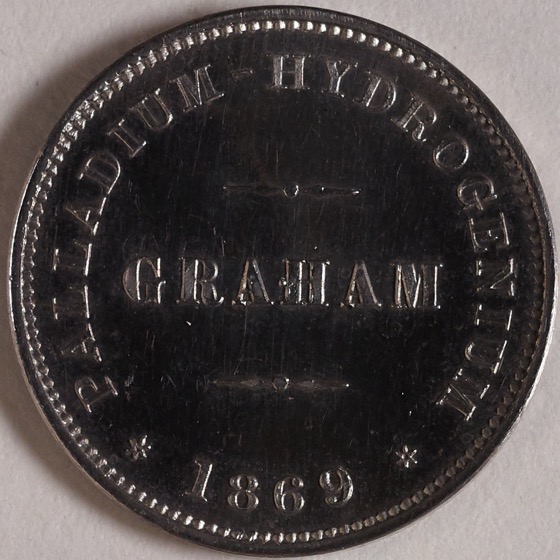
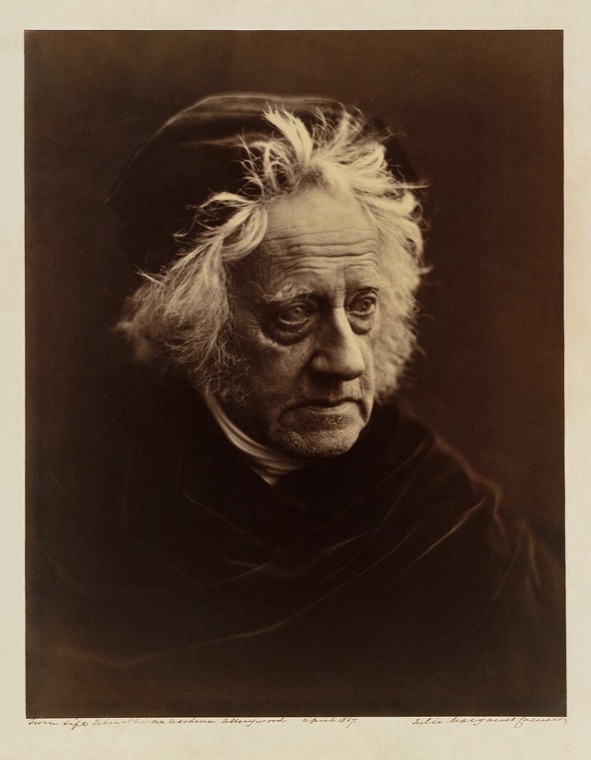
Thomas Graham, the Master of the Royal Mint, had these discs struck in 1869. He gave this one to Sir John Herschel, the astronomer who was Master of the Mint before him. Hydrogenium was Graham’s name for a metal that he thought was inside the disc. He thought that hydrogen, packed into palladium, was a metal.

He was wrong. But one number from this work, measured again by James Dewar in 1873, is almost the same as the number that physicists calculated in 1935 for the density at which hydrogen becomes a metal.
Hydrogen of the stars
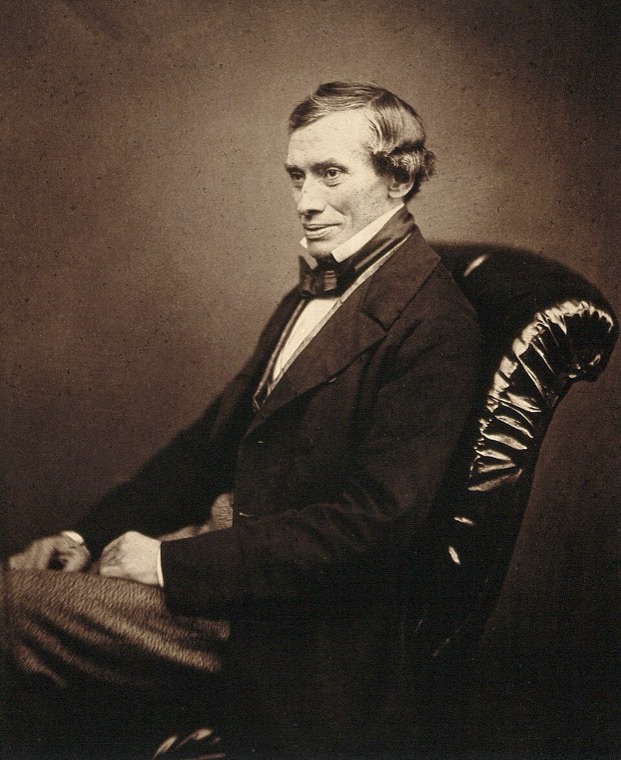
Graham was born in Glasgow in 1805. He became Professor of Chemistry at University College, London, in 1837, and in 1855 he followed Herschel as Master of the Mint (Smith 1884). His biographer wrote that the work for which he “will be chiefly remembered” was the new bronze coinage.

As Master, Graham continued his research on how solid metals take in gases. In May 1867 he heated a strip of the Lenarto meteorite, a piece of iron that fell from space, in a vacuum. The strip gave off almost three times its own volume of gas, and most of that gas was hydrogen. Astronomers had seen hydrogen in the light of the stars. Graham wrote that the meteorite “may be looked upon as holding imprisoned within it, and bearing to us hydrogen of the stars” (Graham 1867).
Palladium took in much more. In 1868 Graham reported that palladium powder took in 982 times its own volume of hydrogen (Smith 1884). A sheet of palladium took in still more when he made it the negative electrode of a battery in dilute acid.
A wire full of hydrogen
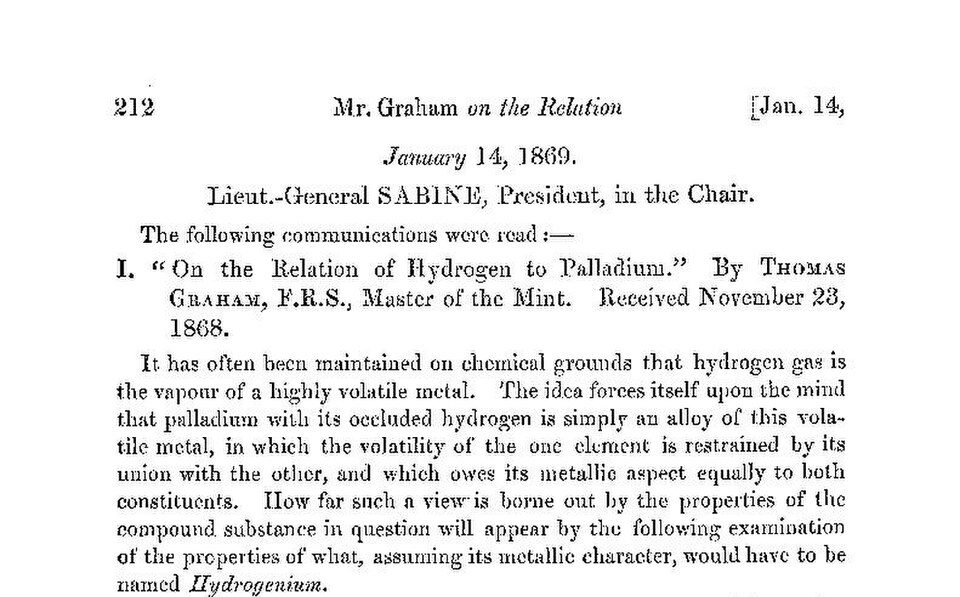
Graham began his paper of January 1869 with an old idea: “It has often been maintained on chemical grounds that hydrogen gas is the vapour of a highly volatile metal” (Graham, January 1869). Palladium gave him a way to test it. If the hydrogen in palladium was a metal, then charged palladium was an alloy of two metals, and it would behave like one.
He charged a palladium wire 609 millimeters long with 936 times its own volume of hydrogen, and the wire became almost 10 millimeters longer. From the weight of the hydrogen and the increase in volume, he calculated a density for hydrogenium of about 2, close to the density of magnesium.
The charged wire was still 81% as strong as before, and Graham asked whether anything other than a metal could keep so much strength. It conducted electricity a quarter less well, as alloys usually do. A small piece of it turned toward a magnet almost five times as far as plain palladium. Every test agreed with his idea, and the last one took him back to the meteorite. Iron meteorites are magnetic, and the Lenarto iron held hydrogen. He concluded that “hydrogenium takes its place among magnetic metals”.
The wire that grew shorter
One result did not agree. When Graham drove the hydrogen out of a wire, the wire did not go back to its first length. It became shorter than it was at the start, by almost the same distance that it had grown.
In June 1869 he gave an explanation (Graham, June 1869). He thought that pure palladium started to shrink as soon as the hydrogen went in, so the shrinking hid half of the true growth. To test this, he used wires of palladium alloyed with platinum, gold or silver. These wires did not shrink, and they grew about twice as much. He compared the two kinds of wire to a leech that takes in blood. The alloy wire was like a leech that grows larger and keeps its shape. The pure palladium wire was like a leech whose body “becomes shorter but thicker”.
Twice the growth meant half the density. Graham now gave 0.733 for hydrogenium, “provisionally”.
Dewar’s number
James Dewar, in Edinburgh, measured hydrogenium again. He weighed charged pieces of palladium in air and in water, and in January 1873 he reported a density of 0.620 for the hydrogen in them. In his words, “7 litres of gas are condensed into 1 cubic centimetre” (Dewar 1874).
Hydrogen can become a metal, but only at enormous pressure. In 1935 Eugene Wigner and Hillard Huntington calculated that solid hydrogen would become a metal at a density of about 0.62 grams per cubic centimeter. In 1996 William Nellis and his colleagues made fluid metallic hydrogen with shock waves, at 1.4 million atmospheres and a density of about 0.65 (Nellis 2014). In 2020 a group led by Paul Loubeyre reported that cold solid hydrogen probably became a metal at more than 4 million atmospheres (Desgreniers 2020).
Dewar’s 0.620 is almost exactly the 1935 value, and Graham’s 0.733 is about 15% higher. But the two numbers do not measure the same thing. Dewar’s number is the weight of the hydrogen divided by the volume that the palladium gained. It does not mean that the hydrogen atoms in the palladium were as close together as in metallic hydrogen. We found no source that compares the two values, so we cannot say if the match is more than chance.
What was in the wire
Today, chemists call palladium with hydrogen in it palladium hydride. At the surface of the metal, hydrogen molecules break into single atoms, and the atoms go into the small spaces between the palladium atoms (Maksymov and Kostylev 2021). There is no second metal.
Graham’s measurement of the growth was good. When palladium is full of hydrogen, its crystal grows by about 3.5% in each direction. His corrected value of June 1869 was 3.2%. His magnetic result was wrong. Hydrogen makes palladium less magnetic, and in a 2012 study the magnetism of palladium hydride fell to zero when there were more than 0.65 hydrogen atoms for each palladium atom (Akamaru and others 2012). We did not find an explanation for his result.
The stamp of the Mint
Graham’s biographer described the discs in 1884: Graham takes hydrogen, “brings it into an alloy and the form of a medal, and puts upon it the stamp of the Mint” (Smith 1884). According to a text from the Royal Mint Museum, which we know only as a copy on a collectors’ forum from 2018, Graham gave discs to friends but did not put one in the Mint’s own museum (Royal Mint Museum). The Mint’s example came later, in the will of the chemist Sir William Pope. The Science Museum Group has a second disc, from the Chemical Society, in a small brown case (Science Museum Group, 1973-416/2). We found no record of how many were struck.
Graham died on 16 September 1869, three months after his paper on the leech. The Royal Mint Museum text calls him the last scientist to run the Mint, after Isaac Newton and a few others. From 1870 the Chancellor of the Exchequer was the Master of the Mint (Coinage Act 1870, section 14).
The disc that Graham gave to Herschel still has its label: 900 volumes of hydrogen. We found no published test of how much hydrogen, if any, is still in it.
Sources
- Graham, T. (1867). On the occlusion of hydrogen gas by meteoric iron. Proceedings of the Royal Society of London 15, 502–503. archive.org
- Graham, T. (January 1869). On the relation of hydrogen to palladium. Proceedings of the Royal Society of London 17, 212–220. archive.org, full volume
- Graham, T. (June 1869). Additional observations on hydrogenium. Proceedings of the Royal Society of London 17, 500–506. Same volume.
- Smith, R. A. (1884). The Life and Works of Thomas Graham. Glasgow. archive.org
- Science Museum Group, object 1943-53, “Palladium Hydrogenium”. Collection page
- Science Museum Group, object 1973-416/2, “Half sovereign or trial piece, inscribed Palladium Hydrogenium”. Collection page
- Royal Mint Museum, text on the palladium trial piece, as copied on the Predecimal forum, 6 September 2018. We did not find the original. Forum thread
- Coinage Act 1870, section 14. Irish Statute Book
- Dewar, J. (1874). On the physical constants of hydrogenium. Philosophical Magazine, series 4, 47, 334–343. From the Proceedings of the Royal Society of Edinburgh, 20 January 1873. archive.org
- Maksymov, I. S. and Kostylev, M. (2021). Magneto-electronic hydrogen gas sensors: a critical review. arXiv:2112.07296
- Akamaru, S., Okazaki, K., Hara, M. and Matsuyama, M. (2012). Construction of alternating-current magnetometer for metal hydride and its performance tests. University of Toyama, Hydrogen Isotope Research Center report 31, 69–76. Repository record
- Nellis, W. J. (2014). Dynamic high pressure: why it makes metallic fluid hydrogen. arXiv:1406.2899
- Desgreniers, S. (2020). A milestone in the hunt for metallic hydrogen. Nature 577, 626–627. PDF